The BJJ Over 40 reading list
The best BJJ books can help you understand what happens on the mats—and make better use of the time you spend there.
You still need to train, feel the positions and work against somebody who is resisting you. A book gives you another way to explore the ideas behind that experience: why a technique works, how positions connect and how to approach your development.
For those of us training jiu-jitsu over 40, that matters. The aim is to understand the game well enough to make what we know work more efficiently.
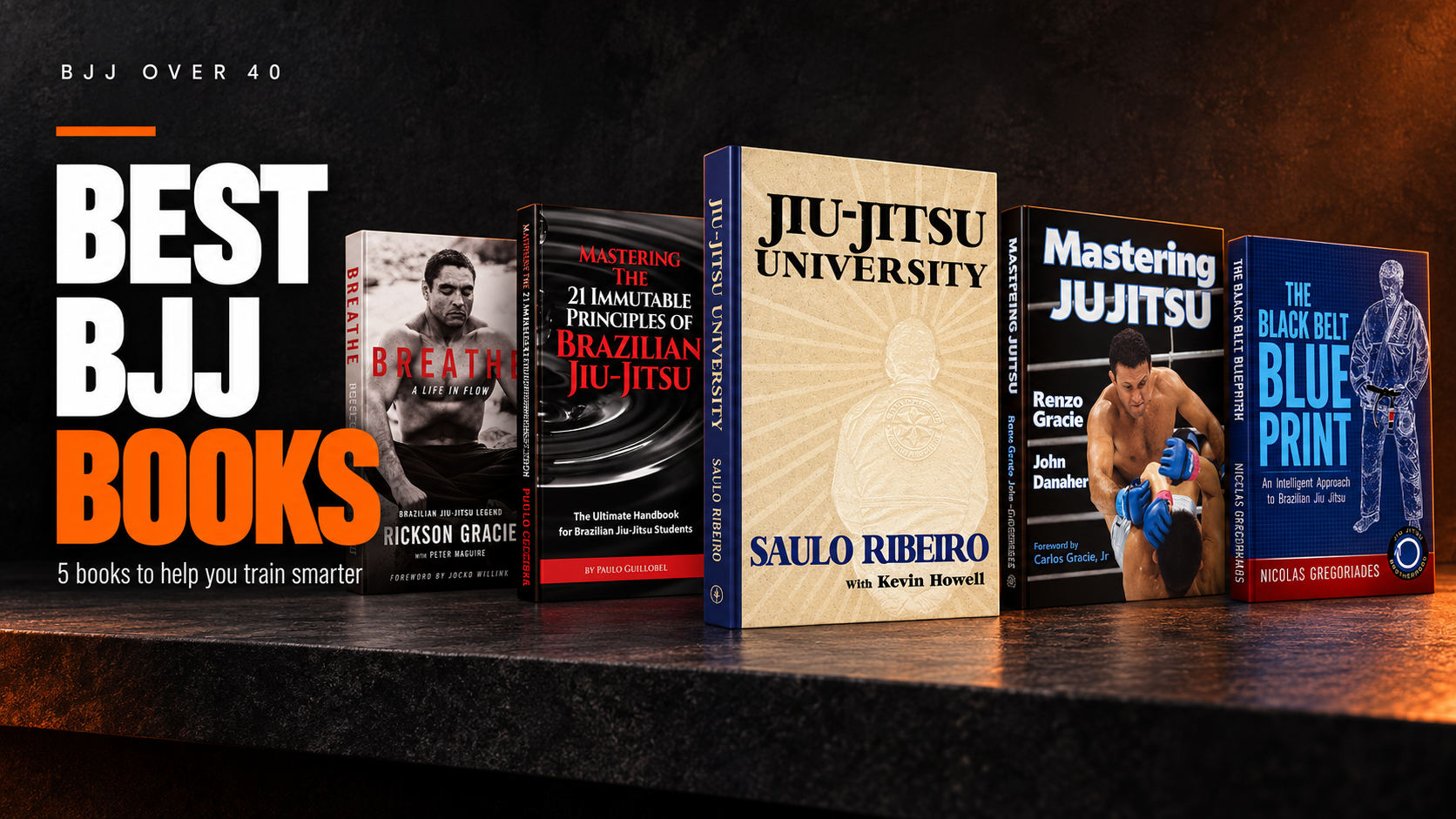
These five books cover different ground: technical foundations, strategy, training methodology, principles and the history and philosophy of the art. Here is where I would start, depending on what you want from your reading.
Affiliate disclosure: As an Amazon Associate I earn from qualifying purchases. If you buy through the links below, I may earn a commission at no extra cost to you.
Choose your starting point
Which BJJ book is right for you?
| Book | Start here if you want… |
|---|---|
| Jiu-Jitsu University | A technical reference from white belt onwards. |
| Mastering Jujitsu | Strategy and a view of the complete fighting system. |
| The Black Belt Blueprint | A more thoughtful approach to learning and training. |
| Mastering the 21 Immutable Principles | The concepts behind individual techniques. |
| Breathe: A Life in Flow | A memoir exploring BJJ history and philosophy. |
Buying your first BJJ book? I would start with Jiu-Jitsu University as a companion to your classes. If you prefer a story to a technical manual, start with Breathe.
01 / Best starting point
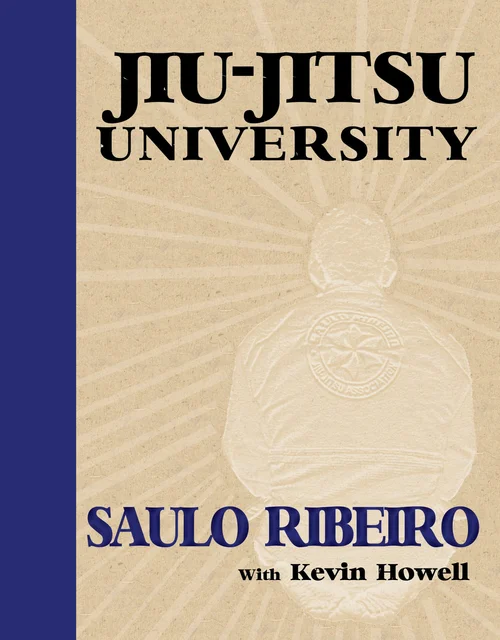
Jiu-Jitsu University
Best for: Beginners and anyone wanting a technical reference to return to.
If you want one instructional book to sit alongside your training, this is the first one I would consider.
Ribeiro organises more than 200 techniques around development from white through black belt. The book also examines common mistakes and practical ways to correct them, giving the reader more than a catalogue of moves.
That emphasis fits the way I think about BJJ over 40. A reliable solution is valuable when you are trying to improve without making every exchange depend on speed, flexibility or strength.
You can use it as a reference for a position you are studying in class. Read the relevant material, ask your coach about the details and then explore it in controlled practice. As your understanding develops, earlier chapters may take on a different meaning.
Why start here? It gives you technical material and a framework for developing it over time.
Amazon links open in a new tab. Check the edition, format and current price before buying.

02 / Strategy & the bigger picture
Mastering Jujitsu
Best for: Understanding how jiu-jitsu works as a complete fighting system.
It is easy to learn an armbar, a guard pass and a sweep as three separate things. A roll asks you to connect them.
Mastering Jujitsu takes that wider view. It combines history and theory with strategy, technical instruction and the different phases of combat: free movement, the clinch and groundwork.
That makes it an interesting choice if you want to understand the martial art beyond a particular sport position. Its scope includes training, competition and self-defence, so expect a broader context than a guide to modern tournament tactics alone.
For an older grappler, the useful question is how that understanding affects your decisions. Can you recognise where an exchange is heading? Can you connect a position to the next one? Reading about strategy gives you another way to investigate those questions in your own training.
Why choose it? To think about the relationship between techniques, tactics and the overall situation.
Amazon links open in a new tab. Check the edition, format and current price before buying.

03 / Learning & training approach
The Black Belt Blueprint
Best for: Grapplers wanting to approach their development more thoughtfully.
When progress slows, the answer is not always another class or another collection of techniques. Sometimes you need to examine how you are learning.
The Black Belt Blueprint presents an approach to developing your jiu-jitsu, bringing together ideas about training, technique and the mental side of the art. Its author, Nicolas Gregoriades, was Roger Gracie’s first black belt.
That focus makes it a natural fit for BJJ Over 40. Training time and energy are limited, so it helps to have a reason for what you are working on. You might choose one recurring problem, study it and look for opportunities to practise it rather than measuring a session only by how hard you worked.
I would choose this book if the question you are asking is, “How can I make better use of my training?” It is a different starting point from looking up a particular escape or submission.
Why choose it? To put more thought into the process of improving, as well as the techniques themselves.
Amazon links open in a new tab. Check the edition, format and current price before buying.

04 / Principles behind techniques
Mastering the 21 Immutable Principles of Brazilian Jiu-Jitsu
Best for: Practitioners developing a more conceptual understanding of BJJ.
You can memorise a technique without understanding why it works. That becomes obvious when the position changes slightly and the move you learned no longer seems to fit.
Guillobel’s book focuses on the underlying principles behind jiu-jitsu techniques and strategies. The aim is to help readers understand the details that connect different situations.
That approach interests me because ideas such as posture, base, frames, pressure and space appear throughout the game. You can start asking what is preventing movement, where the weight is and what needs to change before an escape becomes possible.
I would treat this as a companion to technical instruction. Use a concept to investigate a position with your coach, then test your understanding through practice. Concepts become useful when you can recognise and apply them under resistance.
Why choose it? To explore the ideas that make individual techniques work across different positions.
Amazon links open in a new tab. Check the edition, format and current price before buying.
05 / History, mindset & philosophy
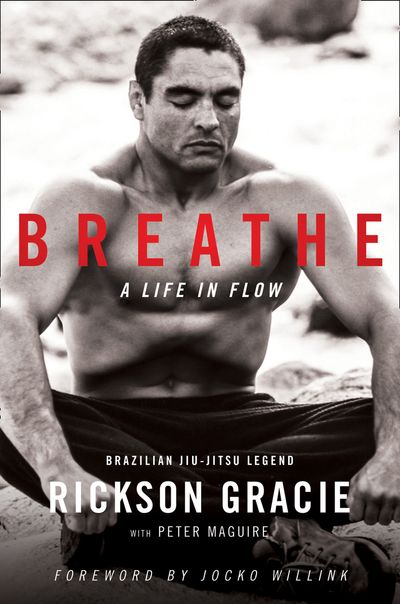
Breathe: A Life in Flow
Best for: Readers wanting a BJJ memoir rather than a technical manual.
The final choice takes you away from diagrams and technical instruction.
Breathe follows Rickson Gracie’s life within the Gracie family, his fighting career and the personal challenges he faced along the way. It brings together the history of his family with his philosophy of jiu-jitsu.
Its appeal is the chance to consider the art through somebody else’s experience: how they think about pressure, ego, awareness and the relationship between mind and body.
For BJJ Over 40, that offers a useful change of perspective. Training can become very focused on the next technique or the result of the next round. A memoir gives you room to think about what jiu-jitsu means to you over a much longer period.
Choose this if you want a book to read as a story, with ideas to reflect on afterwards. If you want illustrated answers to a specific position, begin with one of the instructional choices above.
Why choose it? For the story, the history and a different perspective on a life spent in martial arts.
Amazon links open in a new tab. Check the edition, format and current price before buying.
Take the ideas onto the mats
How to get more from a BJJ book
You do not need to buy all five at once. Pick the book that answers the question you are working on now, then give yourself time to use it.
- Choose one problem. Start with a position, a decision or a training habit that keeps coming up.
- Read with that problem in mind. Make a short note of one idea you want to understand better.
- Discuss it with your coach. Ask how it fits the way you are being taught and where the details matter.
- Explore it in practice. Use controlled drilling or agreed positional rounds, then return to the book with your new questions.
The value comes from the connection between reading and training. Particularly as we get older, that can help us make more thoughtful choices about where we put our time and energy.