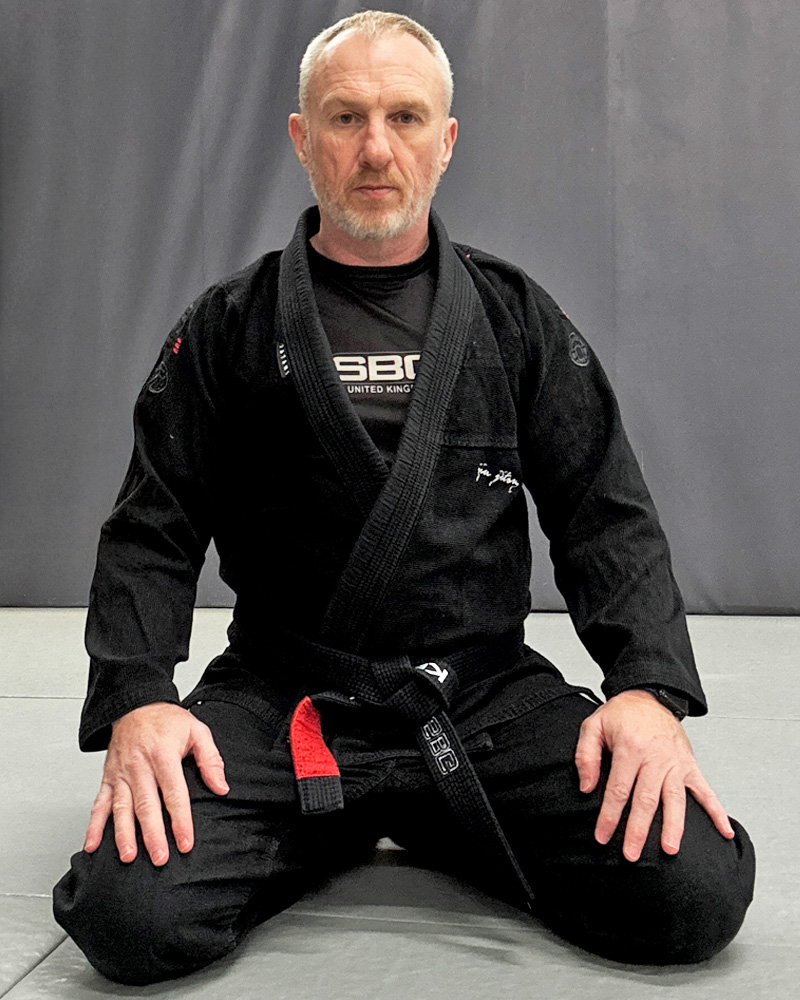
When we talk about fundamentals in Brazilian Jiu-Jitsu, what exactly do we mean? For many people, fundamentals are the basic techniques we learn when we first start training, such as escaping mount, recovering guard, passing, sweeping and applying submissions. We might also include movements such as bridging, shrimping and framing. And while all of these are important, over the years I’ve come to think about fundamentals in a slightly different way.
For me, fundamentals are also about understanding the concepts and principles that underpin effective jiu-jitsu. Space, inside position, balance, posture and leverage are all examples, but there are other principles that I consider equally important, such as patience and relaxation. The longer I train, the more I appreciate that understanding why something works can be just as valuable as knowing how to do it, as can understanding the circumstances in which it’s appropriate to use it.
Learning From Those Who Came Before Me
When I was a blue or purple belt, I didn’t necessarily think about jiu-jitsu in the same way I do today. I certainly thought about its application to fighting, as that’s always been an important part of my approach, but my understanding of concepts such as space and inside position developed gradually through years of training and the influence of my coaches.
My late friend and coach, Karl Tanswell, used to talk a lot about space in jiu-jitsu. Although I can’t recall a particular lesson or explanation, I’m fairly certain that much of my understanding of creating space and taking it away came from him. It’s something I now regularly emphasise when teaching my own students.
Karl’s coach, Matt Thornton, has also influenced the way I think about grappling, particularly through his emphasis on inside position and being inside or outside an opponent’s silhouette. Both Karl and Matt have always emphasised the importance of jiu-jitsu as a fighting art, something that continues to influence the way I train and teach today.
What’s interesting about these concepts is that they’re relatively simple to explain, yet the longer I train, the more I recognise their importance and how frequently they apply to different aspects of jiu-jitsu.
Space: Creating It and Taking It Away
One of the concepts I regularly discuss when teaching is space, whether that’s creating it or taking it away. If I’m underneath someone in side control, for example, I might need to create enough space to establish frames, move my hips and recover a better position. If I’m on top, I might be trying to achieve precisely the opposite by removing the space my opponent needs to move or escape.
The same principle applies throughout jiu-jitsu, whether we’re passing guard, defending submissions or attempting a takedown. However, simply telling a beginner that they need to create space isn’t particularly useful if they don’t have the physical tools to do so. That’s why fundamental movements such as framing, bridging and shrimping remain so important.
I don’t see techniques and principles as competing approaches to learning. A frame helps us manage pressure and distance, a bridge can disrupt someone’s balance or create an opportunity to move, and shrimping allows us to reposition our hips and make use of available space. We need to know how to perform these movements, but we also need to understand what we’re trying to achieve by performing them.
Once somebody starts resisting, things rarely unfold exactly as they did when we were practising a technique with a cooperative partner. Having an understanding of the underlying principles gives us a better chance of adapting to whatever our opponent does, rather than continually trying to reproduce a predetermined sequence of movements.
Patience and Relaxation: Two Overlooked Fundamentals
One of the biggest changes in my own jiu-jitsu over the years has been learning to become more patient and relaxed. I wouldn’t describe myself as impossible to submit, but I am difficult to submit, and I attribute much of that to these two principles.
When I was younger and more physically resilient, I was far more inclined to use explosive movements to escape difficult positions. I’d try to make something happen rather than wait for an opportunity to present itself. These days I approach things differently, partly because my body isn’t as capable of those explosive movements as it once was, but also because experience has taught me that rushing isn’t always necessary.
If someone has me pinned in side control or mount, I don’t necessarily feel the need to escape immediately. Sometimes I’ll make micro-adjustments, gradually creating space inch by inch, and other times I’ll simply wait for my opponent to move. Quite often they will, particularly if they’re less experienced and haven’t yet developed the same degree of patience. In their eagerness to advance their position or attack a submission, they’ll often create the very space I need to escape.
I’ve become comfortable defending from positions that many people find difficult. Not many people manage to choke me when they have full back control, and not many manage to armbar me from S-mount. That’s not to say I never get caught, because occasionally I do, but I’m generally comfortable defending from these positions and can usually find a way to escape without having to expend a considerable amount of energy.
I also try to apply the same principles when attacking. I don’t feel the need to rush a submission or transition from one position to another simply because an opportunity appears to be there. Sometimes maintaining control and waiting for a better opportunity is the more effective choice.
Patience shouldn’t be confused with passivity, however. Even when it appears that I’m doing very little, I may be making small adjustments to my position or paying attention to changes in my opponent’s weight distribution. Being relaxed doesn’t mean doing nothing; it means not expending energy unnecessarily and recognising when it’s appropriate to act.
Patience Depends on the Circumstances
There’s an important distinction between the patience I practise during a recreational round in the gym and the patience required in competition.
In the gym, I’m quite comfortable allowing someone to hold me in mount or side control for an extended period, provided I’m able to defend myself. I have the luxury of being able to take my time, experiment with small adjustments and wait for my opponent to create an opportunity.
In competition, however, that same approach could cost me the match. If I’m mounted or pinned in half guard, I need to escape. I can’t simply remain there defending and expect to win, and sometimes that means using explosive movements or taking risks that I wouldn’t ordinarily take during a round in the gym.
When I talk about patience and relaxation, I’m not suggesting that we should always move slowly or avoid using strength and explosiveness. There are circumstances in which explosive movement is absolutely necessary, and competition is often one of them. The difference is that I’m now far more selective about when I use it.
I think this is an important aspect of understanding principles. We shouldn’t become so attached to a particular principle that we lose sight of what we’re actually trying to achieve.
Jiu-Jitsu Is Still a Fighting Art
Something I’ve always emphasised when teaching Brazilian Jiu-Jitsu is its application to fighting. I enjoy sport BJJ, I’ve competed for years and continue to do so, but I also believe that jiu-jitsu should retain its connection to fighting, regardless of how the competitive sport continues to evolve.
The Gracie family’s development of Brazilian Jiu-Jitsu placed considerable emphasis on dealing with an opponent who could strike, and I think that perspective remains valuable even for people who have no intention of competing in MMA.
When I’m teaching concepts such as space and inside position, I frequently use fighting as an example. I’ll ask students whether they can hit their opponent from a particular position or whether their opponent can hit them. Do they have enough space to generate an effective strike, or have they managed to take away the space their opponent needs to strike them?
These are relatively simple questions, but the answers can completely change how we evaluate a position. A guard that works exceptionally well in sport BJJ might leave us vulnerable to punches in MMA. That doesn’t necessarily make it a bad guard, but I think it’s important to understand its limitations and the circumstances in which we’re using it.
At a recent seminar in the UK, Matt Thornton covered open guard for Vale Tudo, essentially looking at how we approach open guard when strikes are involved. I think there’s considerable value in continuing to explore jiu-jitsu from this perspective, even if our primary interest is the sporting aspect of the art.
It’s something I also do during my own training. Even when I’m rolling in a regular BJJ class, I’ll sometimes consider whether I could be punched from the position I’m in. I might be perfectly comfortable defending from underneath someone, but if I recognise that I’m vulnerable to strikes, I might adjust my position or bring a hand towards my head as though I were defending a punch.
Of course, this is all a form of role-playing in my own mind. Nobody is actually trying to hit me, and imagining strikes isn’t the same as dealing with them in a live situation. Nevertheless, it’s something I do to maintain an awareness of how the circumstances might change if strikes were involved.
Understanding a Technique Doesn’t Mean You Have to Use It
I recently taught a class in which we looked at pulling to half guard from standing. The reason I chose to teach it was that an opponent had attempted it against me at the European No-Gi Championships. It didn’t work out particularly well for him, as I caught him in a Japanese necktie and submitted him in under a minute, but I still thought it was worth exploring with my students.
I made it clear during the class that pulling to half guard isn’t necessarily something I would choose to do myself in competition, and it’s certainly not something I would choose to do in an MMA fight or a self-defence situation. That doesn’t mean I don’t see any value in teaching it, however.
Just because a technique didn’t work in one particular exchange doesn’t mean it has no value, and just because I wouldn’t personally choose to use it doesn’t mean it won’t suit somebody else’s game.
I don’t want to discourage students from exploring different styles of jiu-jitsu or developing a game that is particularly well suited to sport competition. What I would encourage them to do is remain open-minded and consider how the introduction of strikes might change their approach.
I’d rather students develop an understanding of jiu-jitsu that allows them to make informed decisions about their own game than simply reproduce the way I grapple.
Defence Means Different Things in Different Situations
When teaching beginners, I generally consider defence to be the most important aspect of learning jiu-jitsu, assuming we’re talking about training in the gym. Learning to protect yourself, remain composed under pressure and escape difficult positions provides a good foundation from which to develop the rest of your game.
However, if we’re talking about MMA or self-defence, our priorities can be quite different. Lying on our back or side, keeping our elbows tight and protecting our neck might be perfectly sensible when defending submissions, but those things alone are of limited value if our opponent is able to punch or kick us in the head.
In those circumstances, simply remaining underneath someone and successfully defending submissions isn’t enough. We also need to consider whether we can control their ability to strike, improve our position, escape or get back to our feet.
This brings us back to the importance of understanding context. A position in which I feel perfectly safe during a round of BJJ might be a position I’d be desperate to escape from in a fight. The mechanics of jiu-jitsu haven’t changed, but the problem I’m trying to solve has.
I’m Still Learning to Teach
Despite having trained jiu-jitsu for many years, I’m still developing as a coach and there are plenty of things I need to improve. Being an experienced grappler doesn’t automatically make someone an effective instructor, and knowing how to perform a technique and knowing how best to teach it are two quite different skills.
One of the challenges of teaching is that things which seem relatively obvious to us after years of training aren’t necessarily obvious to someone who’s just starting out. I might tell a beginner that they need to create space or establish inside position, but that doesn’t mean they automatically understand how to do it. They still need to learn the fundamental movements, practise them and experience how those principles apply against a resisting opponent.
I certainly don’t claim to have found the perfect way to teach jiu-jitsu, but I think it’s important that we continually question what we’re teaching, why we’re teaching it and whether we’re helping students develop their own understanding of the art. It’s something I’m still working on and expect to continue working on for as long as I’m coaching.
Why This Matters for BJJ Over 40
I think understanding these principles becomes increasingly important as we get older. Our bodies change, we might lose some flexibility, recover more slowly or develop injuries that make certain movements difficult or uncomfortable.
I’ve experienced this myself, particularly after suffering herniated discs in my neck during my purple belt years. There are positions and movements I now prefer to avoid, not because they’re necessarily ineffective, but because they don’t suit my body.
As I’ve already explained, when I was younger I was far more inclined to rely on explosive movement to escape difficult positions. Now I place greater emphasis on patience, relaxation, positioning and making small adjustments. Although I still use explosive movements when necessary, particularly in competition, I’m considerably more selective about when and how I use them.
What’s interesting is that I don’t necessarily consider all of these changes to be compromises I’ve had to make because I’m getting older. Some of them are simply improvements in my jiu-jitsu that have come about through experience. Learning to be more patient, recognising when an opponent is likely to move and understanding how to create space with minimal effort are things that would have benefited me just as much when I was younger.
For those of us training beyond 40, understanding the principles behind the movements we perform gives us more options. If a particular movement no longer suits our body, we can explore other ways of achieving the same objective rather than continually trying to force ourselves to perform something that is no longer appropriate.
We don’t necessarily have to become less effective grapplers simply because we can no longer move in the same way we once did.
Final Thoughts
The longer I train Brazilian Jiu-Jitsu, the more I appreciate the importance of fundamentals, although my understanding of what constitutes a fundamental has changed considerably over the years.
For me, fundamentals aren’t simply a collection of basic techniques. They include an understanding of space, inside position, balance, leverage, patience and relaxation, alongside the physical movements that allow us to apply those principles.
Equally important is recognising that the circumstances in which we find ourselves determine how we apply them. The patience that serves us well during a recreational round might not be appropriate when we’re losing on points in competition, just as a guard that works brilliantly in sport BJJ might expose us to strikes in a fight.
I’m still learning, both as a grappler and as a coach, and one of the things I enjoy most about jiu-jitsu is that after all these years there’s still so much to understand. Sometimes that means learning something entirely new, but quite often it simply means developing a better understanding of something I’ve been doing for years.
Knowing how to perform a technique is important, but understanding why, when and under what circumstances to use it is what allows our jiu-jitsu to continue evolving as we get older.